


Key takeaways
- For a first Tanzania safari: The northern circuit—particularly the Serengeti, Ngorongoro and Tarangire—is an excellent starting point.
- For wildebeest migration experiences: The right part of the Serengeti depends on the season and rainfall, not simply the tour title.
- For elephants: Tarangire is particularly rewarding, especially when dry-season wildlife gathers around water sources.
- For a different safari experience: Nyerere and Ruaha offer major wildlife landscapes outside the classic northern circuit.
- For limited time: Select fewer destinations and protect your actual game-drive time.
- For families and couples: Choose an itinerary with appropriate accommodation, driving times and flexibility.
- For safari prices: Compare inclusions, vehicle arrangements, park fees and accommodation standards before comparing the headline figures.
- For the best overall experience: Book the route that fits your priorities rather than trying to see everything in one journey.
Quick facts
| Main safari gateway | Arusha for the northern circuit |
|---|---|
| Major northern destinations | Serengeti, Ngorongoro, Tarangire and Lake Manyara |
| Major southern destinations | Nyerere and Ruaha |
| Good first-safari duration | Approximately 5–7 days, depending on the route |
| Short safari option | 1–4 days in appropriately chosen parks |
| Popular dry-season period | Generally June–October |
| Green-season opportunities | Yes, including wildlife photography and seasonal migration activity |
| Common safari transport | Guided 4×4 vehicle |
| Other safari experiences | Walking, boat and balloon activities where authorised and available |
| Common accommodation choices | Camping, lodges and tented camps |
| Suitable for families? | Yes, with appropriate planning |
| Can wildlife sightings be guaranteed? | No |
Choosing a safari in Tanzania sounds simple until you start comparing the options.
One itinerary promises the Big Five in the Serengeti. Another follows the wildebeest migration. A third combines several national parks with a beach holiday in Zanzibar. You may also discover private safaris, group departures, luxury tented camps, walking safaris and specialised photography tours.
They can all sound appealing, yet they are not interchangeable.
A couple planning a honeymoon may want beautiful accommodation and unhurried mornings. A family travelling with young children may need shorter drives and flexible activities. Someone interested in elephants might enjoy Tarangire more than an expensive journey built around seasonal migration herds.
The right Tanzania safari tour is the one that matches your interests, the wildlife conditions during your visit, your available time and the experience you actually want—not necessarily the tour with the most famous destinations.
This guide explains how to compare Tanzania safari tours, select the most suitable national parks, understand safari prices and identify the questions worth asking before you commit to a booking.
What Types of Tanzania Safari Tours Are Available?
Not every safari follows the same format.
Some focus on watching large mammals from a vehicle. Others are built around wildlife photography, seasonal migration, particular habitats or a quieter journey through lesser-visited regions.
Before you choose an itinerary, decide what kind of experience you would enjoy most.
Classic wildlife safaris
A classic safari usually centres on game drives in national parks and protected areas.
You travel with a guide, often in a 4×4 vehicle with a roof designed for wildlife observation.
The guide helps identify animals, interpret their behaviour and select suitable areas according to the park rules and prevailing conditions.
This is a natural choice for first-time visitors because it offers flexibility and opportunities to encounter a wide variety of wildlife.
Classic northern-circuit safaris often combine Tarangire, Ngorongoro and the Serengeti.
Big Five safaris
The Big Five are the lion, leopard, elephant, buffalo and rhinoceros.
Tanzania supports all five, but seeing every species on a single safari cannot be guaranteed.
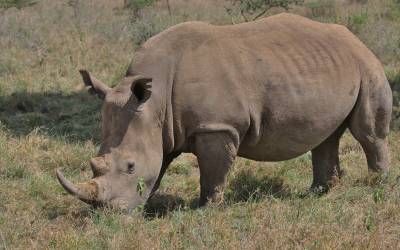
Ngorongoro Crater is particularly important to travellers hoping to encounter a black rhino. The Serengeti provides extensive habitats for lions, leopards and other wildlife, while Tarangire is especially well known for elephants.
A Big Five safari works best when the route includes suitable habitats and enough time for patient game viewing. Read more in our guide to the Big Five safari in Tanzania.
Wildebeest migration safaris
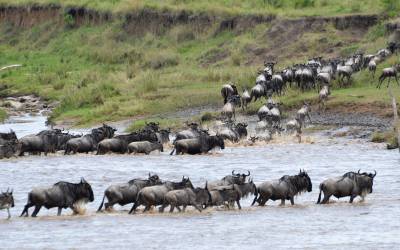
The Great Migration involves large numbers of wildebeest and other grazing animals moving through the Serengeti–Mara ecosystem in response to rainfall and grazing conditions.
It is not a single event taking place in one location throughout the year.
Some travellers are interested in the calving period in the southern Serengeti and Ndutu area. Others want to visit northern areas associated with Mara River crossings.
These experiences require different seasonal planning.
A migration itinerary should identify the region you will visit and explain why it is appropriate for your dates.
No operator can promise that a particular river crossing will happen during your stay.
Photography safaris
Wildlife photography benefits from time, patience and the freedom to remain at sightings when conditions are suitable.
A photography-focused safari may prioritise early departures, carefully selected locations and a vehicle arrangement that gives photographers appropriate space for their equipment.
Ask whether the itinerary allows longer game drives and whether other travellers have the same expectations.
A vehicle full of guests with conflicting priorities may not be ideal for serious photography.
Walking and boat safaris
A safari does not always mean watching wildlife from a vehicle.
In suitable locations, authorised walking activities can introduce visitors to tracks, plants, insects and the smaller details of the landscape.
Nyerere National Park is also associated with boat-based wildlife experiences on the Rufiji River system.
Walking and boating are subject to local regulations, permits, conditions and authorised guides.
These activities complement conventional game drives rather than replacing them.
Special-interest safaris
Some travellers are especially interested in birds, reptiles, amphibians, botany or conservation.
Such interests may lead to destinations outside the familiar northern tourist circuit.
Tanzania's forest reserves and mountain ecosystems are particularly important for specialist natural-history programmes.
For a special-interest tour, guide qualifications and the suitability of the actual field locations matter more than a broad promise of seeing many species.
Safari styles compared
| Safari style | Main focus | Best suited to |
|---|---|---|
| Classic game-drive safari | Diverse wildlife and landscapes | First-time safari travellers |
| Big Five safari | Iconic large mammals | Wildlife enthusiasts |
| Migration safari | Seasonal wildebeest movements | Travellers with specific wildlife interests |
| Photography safari | Extended observation and photography | Photographers |
| Walking safari | Ecology, tracking and smaller natural details | Active travellers |
| Boat safari | Rivers, birds and aquatic wildlife | Travellers wanting varied activities |
| Family safari | Flexible pacing and child-appropriate logistics | Families |
| Special-interest safari | Birds, reptiles, amphibians or specific habitats | Natural-history enthusiasts |
Which Tanzania Safari Destinations Should You Choose?
For most first-time travellers, the Serengeti, Ngorongoro Crater and Tarangire offer a strong combination of wildlife and landscapes. However, other regions can be more suitable for particular interests.
Serengeti National Park: for expansive wildlife viewing
The Serengeti is one of Tanzania's best-known national parks.
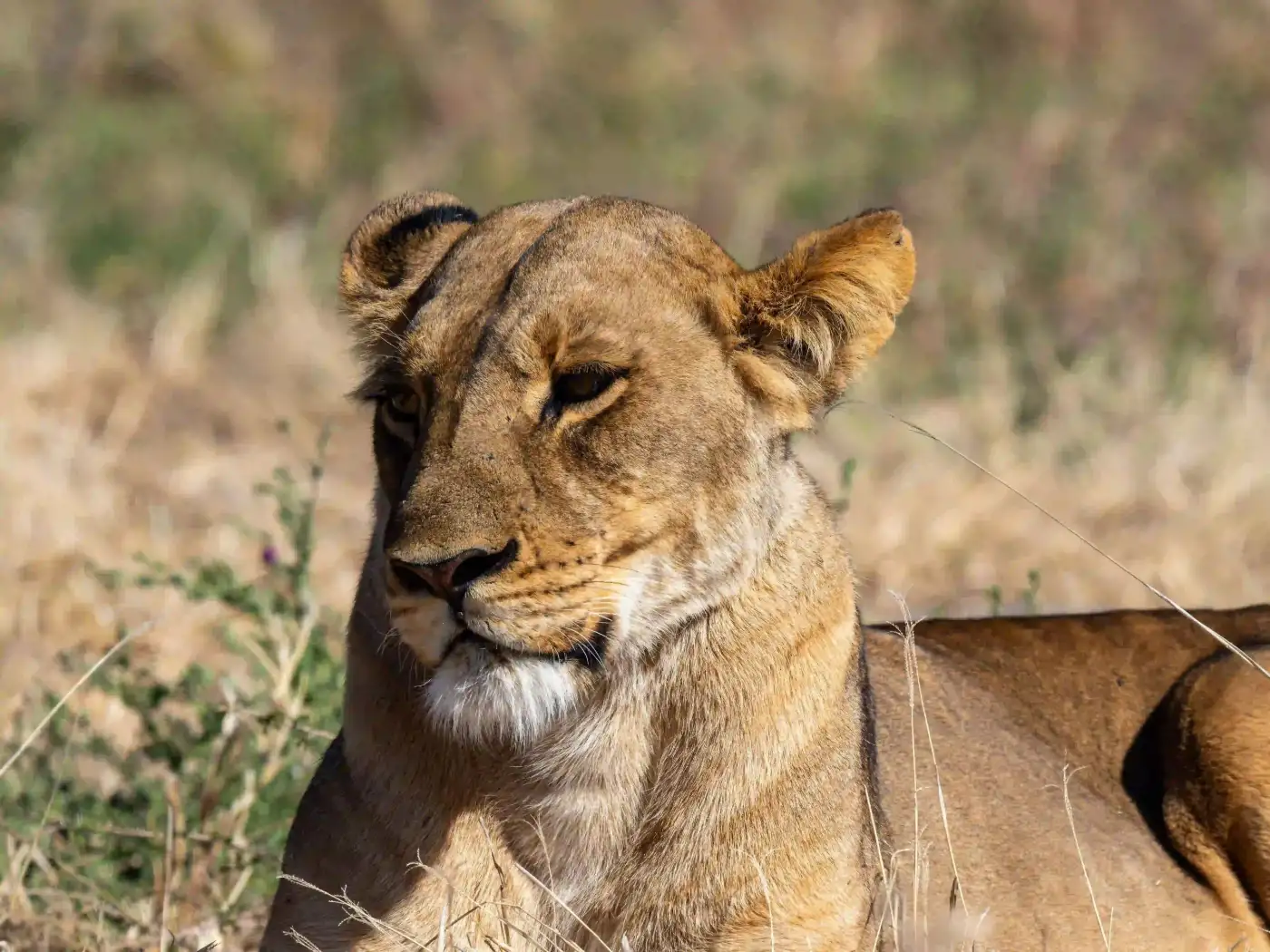
Its broad grasslands, woodlands and river corridors support large herbivores and predators, including lions, leopards and cheetahs.
It is also part of the ecosystem in which the Great Migration takes place.
The Serengeti is particularly rewarding for travellers who can spend several days exploring rather than simply arriving, completing one game drive and leaving.
Different parts of the park can provide very different experiences.
The central Serengeti is frequently included in year-round wildlife itineraries, while the northern, western and southern areas may become especially relevant at different stages of the migration.
Choose the Serengeti if: You value extensive wildlife viewing, open landscapes, predators or migration-related experiences.
Think twice if: Your schedule is extremely short and you would need to spend most of it driving from Arusha.
Ngorongoro Crater: for extraordinary scenery and wildlife concentration
Ngorongoro Crater is a volcanic caldera within the Ngorongoro Conservation Area.
Its grasslands, wetlands and woodland environments support an impressive variety of wildlife.
The crater is an important habitat for black rhinos, along with lions, buffaloes, elephants, hippos and numerous bird species.
It offers a different experience from the Serengeti, partly because visitors explore a concentrated landscape rather than an enormous open ecosystem.
Choose Ngorongoro if: You want distinctive scenery, a broad wildlife experience and the possibility of observing a black rhino.
Keep in mind: Crater access, vehicle charges and permitted activities must be accounted for in your itinerary and quotation.
Tarangire National Park: for elephants and baobabs
Tarangire is known for its elephants, ancient baobab trees and dry-season wildlife activity.
The Tarangire River and associated habitats provide important water sources during drier periods.
The park is particularly appealing to travellers interested in elephants and landscape photography.
Its location also makes it a useful part of shorter northern-circuit safaris.
Choose Tarangire if: Elephants, distinctive scenery and a classic game-drive experience are high priorities.
Keep in mind: Wildlife distribution changes between seasons.
Lake Manyara National Park: for habitat diversity and birdlife
Lake Manyara brings together groundwater forests, lake environments, woodland and views of the Rift Valley escarpment.
The park is associated with elephants, baboons, monkeys, birds and its well-known tree-climbing lions.
However, the lions should be considered a possible sighting rather than a guaranteed attraction.
Lake Manyara can complement nearby destinations by adding a landscape that feels noticeably different from the open Serengeti.
Choose Lake Manyara if: You enjoy birds, forests and varied ecosystems.
Arusha National Park: for convenient wildlife and mountain scenery
Arusha National Park is relatively close to Arusha city.
Its landscape includes forest, lakes, grassland and the slopes of Mount Meru.
Visitors can look for giraffes, buffaloes, monkeys and birdlife while enjoying a different setting from the famous savanna parks.
It is particularly convenient when travellers have a limited amount of time.
Choose Arusha National Park if: You want a nature-focused excursion near Arusha, appreciate birdlife or prefer a less demanding travel day.
Nyerere National Park: for river-based experiences
Nyerere lies in southern Tanzania and includes extensive woodland, floodplains and river habitats.
The Rufiji River system is central to its character.
Depending on local permissions, conditions and the chosen operator, travellers may combine conventional game drives with boat activities or guided walks.
Wildlife includes elephants, buffaloes, hippos, crocodiles, lions and African wild dogs.
Choose Nyerere if: You are interested in wildlife viewing beyond the northern circuit, particularly river environments and varied safari activities.
Ruaha National Park: for expansive southern wilderness
Ruaha is a major national park in south-central Tanzania.
Its habitats support elephants, buffaloes, lions, leopards, antelopes and impressive birdlife.
The Great Ruaha River is an important feature of the landscape.
Ruaha can be appealing to travellers who want time in a large wildlife area without concentrating exclusively on Tanzania's best-known northern destinations.
Choose Ruaha if: You value extensive wilderness landscapes, predators and an itinerary focused on southern Tanzania.
Comparing Tanzania's safari destinations
| Destination | Main attraction | Particularly suitable for | Planning consideration |
|---|---|---|---|
| Serengeti | Predators, savanna and migration | Classic wildlife and photography | Large area; allow enough time |
| Ngorongoro Crater | Wildlife concentration and crater scenery | First-time visitors and rhino interest | Crater access and conservation charges |
| Tarangire | Elephants and baobabs | Elephant lovers | Seasonal animal movements |
| Lake Manyara | Birds, forest and lake landscapes | Birdwatchers and varied scenery | Dense vegetation in some areas |
| Arusha National Park | Mountain and forest habitats | Short excursions | Not a classic Big Five-focused park |
| Nyerere | River wildlife, boat opportunities | Southern safari and varied activities | Activity permits and logistics |
| Ruaha | Large wilderness and predators | Wildlife enthusiasts | Additional travel planning |
Should you visit northern or southern Tanzania?
The northern circuit is often the most straightforward option for a first safari focused on the Serengeti and Ngorongoro.
Southern Tanzania is worth considering when visitors want different ecosystems or have already explored the northern parks.
Neither region is automatically better.
The best choice depends on the wildlife and activities that interest you, the season, your arrival point and the amount of travel you want to undertake.
When Is the Best Time to Book a Tanzania Safari?
Tanzania offers wildlife experiences throughout the year, but the conditions change with rainfall and location.
There is no single month that is ideal for every safari.
June to October: dry-season travel
June to October generally offers favourable dry-season wildlife viewing in much of northern Tanzania.
Vegetation may become less dense, and animals often gather around reliable water sources.
Tarangire is particularly rewarding during dry-season conditions.
This is also a popular travel period, so demand for accommodation and some activities may be higher.
November and December: changing conditions
Short rains can bring greener landscapes and alter where animals feed and move.
Travellers may enjoy birdlife, photography and a different appearance of the parks.
Rainfall does not follow an exact timetable, so allow flexibility.
January to March: green-season opportunities
Some parts of the Serengeti ecosystem become especially interesting during the wildebeest calving season.
The southern Serengeti and adjoining Ndutu area are often important at this stage, depending on rainfall and herd movements.
This can be an appealing period for wildlife photographers.
However, the location of migration animals should be verified when planning a specific itinerary.
April and May: generally wetter conditions
The longer rains can create beautiful green landscapes.
They can also cause muddy tracks, slower travel and seasonal changes in accommodation operations.
Visitors travelling during this period should choose routes that are appropriate for the expected conditions.
Safari seasons compared
| Period | General conditions | Possible advantages | What to consider |
|---|---|---|---|
| June–October | Generally dry | Good wildlife-viewing conditions, especially around water | Demand and accommodation availability |
| November–December | Short rains in many areas | Green landscapes and birdlife | Variable rain and road conditions |
| January–March | Mixed green-season conditions | Seasonal calving activity and photography | Correct wildlife location matters |
| April–May | Often wetter | Green scenery and potentially quieter areas | Accessibility and lodge operations |
Travel tip: If the Great Migration is your main reason for travelling, choose the relevant Serengeti region first and then compare itineraries. Simply booking any safari labelled “migration tour” is not enough.
How Many Days Do You Need for a Tanzania Safari?
The right duration depends on the number of destinations, transfer times and how much time you want for game drives.
One to four days: a short safari
Short itineraries can be rewarding when they concentrate on accessible destinations.
Arusha National Park, Tarangire and Lake Manyara can work well for shorter trips.
Ngorongoro can also be included with careful planning.
The Serengeti is more demanding to reach by road and generally benefits from additional time. Our guide to short Tanzania safaris of 1–4 days compares these options in detail.
Five to seven days: a balanced first safari
For many first-time visitors, five to seven days provides a useful starting range.
This can allow time for multiple national parks and more than one game drive in a preferred destination.
For example, a northern-circuit safari might include Tarangire, the Serengeti and Ngorongoro.
The precise number of days needed depends on where you stay and how much driving is involved.
Eight to ten days: more time to explore
An eight- to ten-day safari can offer a slower pace, longer stays or more specialised activities.
It can also create room for a more carefully targeted migration itinerary or an additional destination.
This can be particularly attractive to photographers, families or travellers who prefer fewer accommodation changes.
Eleven days or longer: specialised journeys
Longer itineraries can support more extensive wildlife exploration, special-interest activities or combinations of distant regions.
They may also include time at the coast or in Zanzibar.
The additional days should serve a genuine travel purpose rather than simply adding more parks to the itinerary.
Duration comparison
| Safari duration | Suggested approach | Best suited to |
|---|---|---|
| 1–4 days | Focus on accessible parks | Travellers with limited time |
| 5–7 days | Balanced multi-park itinerary | Many first-time visitors |
| 8–10 days | More time in selected locations | Photographers, families and relaxed travel |
| 11+ days | Special interests or extended combinations | Experienced travellers and longer holidays |
A seven-day safari with carefully chosen accommodation can be more enjoyable than a ten-day itinerary filled with unnecessary transfers.
Private Safari or Group Safari: Which Is Better?
A private safari offers a vehicle and guide arrangement for your own travelling party.
A shared safari brings together travellers who may not know one another before the trip.
Both can be good choices, but they offer different levels of flexibility.
Advantages of a private safari
A private itinerary can be adapted more easily to your interests, subject to park rules and other practical constraints.
You may prefer longer stops for photographs, additional breaks for children or a specific accommodation standard.
Private arrangements can also be useful for couples, families and groups travelling together.
The total vehicle cost, however, is often distributed across fewer people.
Advantages of a shared safari
A shared safari can provide a more economical option for solo travellers or small parties.
You also have opportunities to meet other travellers.
However, departure dates, itinerary changes and daily schedules may be less flexible.
You should confirm the maximum group size, vehicle seating and accommodation arrangements.
Private versus group safari
| Feature | Private safari | Shared safari |
|---|---|---|
| Itinerary flexibility | Generally greater | Usually more limited |
| Wildlife-viewing stops | More adaptable to your party | Shared preferences must be balanced |
| Vehicle arrangement | Dedicated to your party | Shared with other travellers |
| Cost per person | Depends heavily on party size | May offer savings |
| Family suitability | Often more convenient | Depends on group rules |
| Social experience | Your own travelling party | Opportunity to meet other travellers |
The question to ask: How important is flexibility to the way you want to travel?
Road Safari or Fly-In Safari?
For many northern Tanzania tours, road travel is part of the experience.
You travel through different landscapes, towns and agricultural areas on the way to the parks.
However, distances can be substantial.
The Serengeti may take approximately seven to eight hours to reach from Arusha by road, depending on the route, stops and conditions.
Road safari advantages
Road travel can make it easier to combine several parks in a continuous itinerary.
It also avoids the additional cost of some domestic flights.
But the journey should not be confused with time dedicated to wildlife viewing.
A long road transfer may have only limited wildlife-observation opportunities.
Fly-in safari advantages
Flights can reduce the time required to reach remote safari areas.
This may be especially useful for travellers visiting the Serengeti from Zanzibar or connecting distant parts of Tanzania.
However, flight arrangements introduce additional costs, luggage restrictions and scheduling considerations.
Which option should you choose?
For a trip focused on nearby parks, road travel may be practical and efficient.
For a short stay in a distant wildlife area, flying may free up more time.
For longer safaris, a combination of road and air travel can sometimes make sense.
Ask for the total door-to-door journey time before choosing.
Choosing the Right Safari Accommodation
Safari accommodation can influence the quality of your experience as much as the itinerary itself.
An attractive lodge on a website may be located far from the area where you want to spend your game drives.
A simpler tented camp in a suitable location may sometimes provide a more convenient wildlife experience.
Camping safaris
Camping can appeal to travellers who enjoy outdoor experiences and prefer more basic accommodation.
However, the term “camping” covers different arrangements.
Check whether tents, mattresses, bedding, meals, toilets and showers are provided.
Ask how the campsite is managed and what safety procedures apply.
Mid-range lodges and tented camps
Mid-range safaris generally aim to balance comfort with price.
Accommodation may include permanent lodges or tented camps with private bathrooms and arranged meals.
Standards vary, so request the names and locations of the actual properties.
Luxury safaris
Luxury accommodation may offer additional privacy, higher service levels, larger rooms, exclusive settings and specialised dining.
These features can be appealing, particularly for honeymoons or special occasions.
However, a high-end lodge does not guarantee better wildlife sightings.
Accommodation comparison
| Type | Main appeal | Check before booking |
|---|---|---|
| Basic camping | Outdoor experience and potentially lower cost | Equipment, facilities and safety |
| Budget lodge | Simpler accommodation with essential amenities | Room standard and location |
| Mid-range lodge | Balance of comfort and cost | Exact property and inclusions |
| Tented camp | Wildlife atmosphere and proximity to nature | Bathroom facilities, access and safety |
| Luxury lodge or camp | Additional comfort, privacy and service | Location, actual amenities and total price |
Practical advice: Ask not just where you will sleep, but how far the accommodation is from your first game-drive destination the following morning.
How Much Do Tanzania Safari Tours Cost?
There is no single standard price for a safari in Tanzania.
A quotation depends on the number of travellers, accommodation category, route, season, vehicle arrangement, park charges and activities.
A headline price can be useful for initial comparison, but it rarely tells the whole story.
What makes one safari more expensive than another?
Duration: Longer trips usually involve more nights, meals, vehicle use and guiding.
Accommodation: Prices differ between campsites, budget lodges, mid-range properties and luxury camps.
Group size: A private vehicle may cost less per person when more people share it.
Park fees: National park, conservation-area, vehicle, camping and other charges vary by location and visitor classification.
Transport: Long road journeys and domestic flights affect operating costs.
Season: Accommodation prices and availability can change during popular travel periods.
Special activities: Balloon flights, approved walking safaris and other optional experiences may cost extra.
Why two similar itineraries can have different prices
Imagine two safari tours that both last six days.
One includes several nights inside or close to major wildlife areas, with a dedicated vehicle and a full-time guide.
The other uses accommodation farther from the parks or involves different transport and service arrangements.
Even if both mention the Serengeti and Ngorongoro, the experience can be quite different.
That is why the total amount on the quotation is only one part of the decision.
What should a safari quotation include?
Ask for a written breakdown of the services provided, including:
- Travel dates, number of nights and accommodation names.
- Parks visited and activities included.
- Private or shared vehicle arrangements.
- Park and conservation-related charges.
- Meals and drinking water.
- Domestic flights and airport transfers, where applicable.
- Guide services and applicable languages.
- Optional activities and exclusions.
- Payment schedule, quotation validity and cancellation terms.
Comparing safari quotations
| Cost item | Question to ask |
|---|---|
| Tour price | Is this per person, per party or per vehicle? |
| Accommodation | Are the exact properties confirmed? |
| Park fees | Are all applicable charges included? |
| Transport | Which flights and transfers are covered? |
| Vehicle | Private or shared, and with how many passengers? |
| Meals | Which meals and drinks are included? |
| Optional experiences | Are these included or separately priced? |
| Terms | What happens if dates or services change? |
Avoid assuming that a more expensive tour automatically provides better value.
Likewise, an unusually low price should prompt you to check what is excluded rather than immediately assuming it is a bargain.
How to Choose a Safari Based on Your Travel Style
The best safari for one traveller may be completely unsuitable for another.
A useful starting point is to identify what you would most regret missing.
First-time visitors
If you are visiting Tanzania for the first time and want a traditional wildlife safari, consider the northern circuit.
The Serengeti, Ngorongoro and Tarangire offer different ecosystems and a broad range of wildlife experiences.
Avoid adding too many extra stops simply because they appear on popular itineraries.
Families with children
Families benefit from careful attention to driving times, accommodation arrangements and daily routines.
Ask about age restrictions for particular activities.
You should also discuss dietary requirements, rest stops, child-friendly facilities and emergency arrangements.
A private safari may offer flexibility, but a shared option can also be suitable when its conditions match your family's needs.
Couples and honeymoon travellers
For couples, the quality of accommodation and pace of travel may matter as much as the wildlife list.
Consider fewer accommodation changes, comfortable camps and time to enjoy the setting.
A well-chosen journey can feel more special than a crowded itinerary filled with rushed departures.
Wildlife photographers
Photography travellers often benefit from staying longer in fewer locations.
Ask whether the vehicle provides suitable space, whether you can plan around morning and afternoon light and whether the itinerary allows time at sightings.
For specialised photography, a dedicated guide or photographer-focused departure may be worth investigating.
Adventure travellers
Visitors interested in walking, nature interpretation or remote landscapes may prefer an itinerary with more than conventional game drives.
Nyerere, selected northern destinations and specialist guided experiences can offer different options, subject to permissions and availability.
Natural-history enthusiasts
Birdwatchers, botanists and travellers interested in reptiles or amphibians may benefit from visiting habitats beyond the most familiar large-mammal parks.
A knowledgeable specialist guide is particularly important.
These trips should be built around realistic seasonal conditions and confirmed species habitats.
How to Compare Two Tanzania Safari Itineraries
When you find two appealing itineraries, use a consistent set of questions rather than relying on photographs or promotional titles.
Step 1: Compare the actual route
List the parks and accommodation locations in order.
Check whether the journey follows a sensible geographical sequence.
An itinerary with unnecessary backtracking may leave less time for wildlife viewing.
Step 2: Count game-drive opportunities
Do not assume that every day advertised as a safari day is a full game-drive day.
Arrival days, long transfers and departure days may contain limited wildlife viewing.
Ask how many meaningful game-drive periods are planned.
Step 3: Check the accommodation
Request actual property names, room categories and locations.
Find out whether substitutions are allowed and how they would be handled.
Step 4: Compare the guide and vehicle arrangements
Check whether the vehicle is private, what type of vehicle is used and how many people will travel together.
Ask about the guide's language and relevant experience.
For specialist interests, confirm specific qualifications rather than relying on generic descriptions.
Step 5: Compare total costs
Make sure both quotations are based on the same travellers, dates and accommodation expectations.
Check the inclusions and exclusions carefully.
Step 6: Ask about flexibility
Can the operator adjust the route or accommodation to match your preferences?
What happens if a lodge becomes unavailable or conditions affect the itinerary?
How will the company communicate changes?
The safari selection scorecard
Score each proposed itinerary as strong, acceptable or weak in the following areas:
| Criterion | What makes an itinerary strong? |
|---|---|
| Wildlife fit | Visits appropriate habitats for your interests |
| Season fit | Explains why the route suits your travel dates |
| Travel efficiency | Provides realistic transfers and sufficient game-drive time |
| Accommodation | Names suitable, appropriately located properties |
| Guide and vehicle | Clearly explains service and passenger arrangements |
| Price transparency | Gives a complete, understandable quotation |
| Flexibility | Allows sensible adjustments where practical |
| Trust and safety | Provides clear terms, contacts and operating information |
This is a decision tool, not an official safari rating system.
If an itinerary performs poorly on the factors that matter most to you, consider changing it before paying a deposit.
Common Mistakes When Choosing a Tanzania Safari
Mistake 1: Choosing by price alone
The lowest price may come with different accommodation, group arrangements or inclusions.
Better approach: Compare equivalent services and ask for a complete quotation.
Mistake 2: Booking a migration safari without checking the region
The wildebeest migration moves through different parts of the ecosystem.
Better approach: Ask which region the tour visits during your travel dates and why.
Mistake 3: Visiting too many parks
A long list of destinations may mean spending much of the trip travelling.
Better approach: Prioritise time in suitable wildlife habitats.
Mistake 4: Expecting guaranteed wildlife sightings
Wild animals move freely and cannot be scheduled.
Better approach: Choose an experienced guide and maintain realistic expectations.
Mistake 5: Ignoring accommodation locations
A lodge outside the preferred viewing area can add substantial daily travel.
Better approach: Confirm location as well as comfort category.
Mistake 6: Forgetting arrival and departure logistics
Airport transfers and long return journeys can disrupt a tightly planned holiday.
Better approach: Include realistic travel buffers and confirm the full schedule.
Mistake 7: Assuming every activity is permitted everywhere
Walking safaris, night drives, drone use and off-road driving are subject to local rules.
Better approach: Confirm permissions and conditions before booking.
Practical Travel Tips for a Tanzania Safari
Bring binoculars
Binoculars make a noticeable difference when wildlife is far from the vehicle.
This is particularly useful for birds and distant animals on open plains.
Dress for changing conditions
Early mornings can be cool, especially in higher-altitude areas near Ngorongoro.
Afternoons may be considerably warmer.
Light, comfortable layers are often more useful than packing only for hot weather.
Prepare for dust and uneven roads
Safari roads can be rough or dusty.
Protect cameras and other sensitive equipment, and consider your personal comfort when choosing long travel days.
Follow your guide's instructions
Never approach wildlife on foot without an authorised guide in a permitted area.
Do not feed animals or ask a guide to drive off designated tracks where this is prohibited.
Check health and entry requirements
Visa rules depend on nationality and travel circumstances.
Use Tanzania's official immigration portal to check the requirements relevant to you.
For vaccinations, malaria prevention and any personal medical concerns, obtain appropriate professional travel-health advice.
Consider responsible travel practices
Respect wildlife, use water thoughtfully and avoid unnecessary waste.
When cultural activities are offered, look for programmes that involve local communities fairly and respectfully.
Sustainability claims should be supported by specific, verifiable information rather than broad marketing promises.
Tanzania Safari Planning Checklist
Six to twelve months before travel
Decide which animals, landscapes and activities are most important.
Identify a preferred travel period and an approximate budget.
Begin comparing safari styles and suitable destinations.
If you are travelling in a high-demand period or require particular accommodation, enquire early.
Two to three months before travel
Confirm your proposed itinerary and accommodation.
Review the complete quotation, including taxes, park charges, transport and exclusions.
Check relevant visa and health requirements.
Discuss any mobility, dietary or other personal needs with the operator.
In the final two weeks
Reconfirm arrival details, pickup arrangements and emergency contacts.
Check baggage restrictions, especially for domestic flights.
Prepare travel documents, suitable clothing, medication and essential equipment.
Review any updated travel information and ensure your insurance arrangements are appropriate.
Questions to Ask a Local Safari Specialist
Before confirming your Tanzania safari, ask the operator:
- Which itinerary best matches our wildlife interests and travel month?
- How many nights will we spend in each destination?
- How much time is allocated to actual game drives?
- Which accommodation properties are included?
- Are park fees, conservation charges and relevant taxes included?
- Is our safari private or shared?
- What guide and vehicle arrangements will we have?
- Are domestic flights or airport transfers included?
- What happens if accommodation becomes unavailable?
- Which activities need additional permits?
- What payment, cancellation and refund conditions apply?
- Can you explain the main advantages and compromises of the route?
A trustworthy planning conversation should cover the limitations of an itinerary as well as its attractions.
Recommended Tanzania Safari Experiences
The following are existing Wonders of Creation Tours & Safaris programmes relevant to different traveller priorities.
They are examples for comparison rather than endorsements of unverified prices, availability or guaranteed sightings.
3-Day Budget Tanzania Safari — for travellers with limited time
This itinerary combines Tarangire National Park, Lake Manyara and Ngorongoro Crater.
It may suit visitors who want a compact introduction to northern Tanzania's different wildlife habitats.
Before booking, confirm accommodation, the number of travellers and the services included in the quoted price.
Explore the 3-Day Budget Tanzania Safari
6 Days – Tanzania Big Five Safari — for a classic northern circuit
This itinerary is designed around Tarangire, Lake Manyara, the Serengeti and Ngorongoro.
It may appeal to first-time visitors who want several major wildlife destinations in one journey.
Because the published final day combines a long transfer from the Serengeti, a Ngorongoro visit and a return to Arusha, travellers should request a confirmed, realistic daily timetable before booking.
Explore the 6-Day Tanzania Big Five Safari
6 Days Great Wildebeest Migration Safari — for seasonal wildlife interest
This tour focuses on the northern Serengeti and Mara River area, alongside other northern Tanzania destinations.
It may be appropriate for travellers especially interested in northern migration activity during the relevant season.
Wildlife movements and river crossings remain unpredictable.
Confirm the exact location of the accommodation and the amount of time allocated to the northern Serengeti.
Explore the 6-Day Wildebeest Migration Safari
Other specialist options
Travellers staying in Zanzibar can also review the company's existing five-day northern Tanzania safari from Zanzibar.
Those with particular interests in reptiles and amphibians can investigate its specialist 12-day herpetology programme.
The best choice depends on whether you prioritise conventional big-game viewing, seasonal wildlife, travel convenience or a specialist natural-history experience.
Final Thoughts: Choose the Experience, Not Just the Package
Tanzania offers an extraordinary range of safari experiences.
You can spend several days exploring the Serengeti, search for elephants beneath the baobabs in Tarangire, visit the Ngorongoro Crater or discover the river landscapes of Nyerere.
But the best safari is not automatically the longest, most luxurious or most expensive.
It is the journey that gives you enough time in the right places, matches your interests and leaves room for the uncertainty that makes wildlife observation so rewarding.
Begin with what you most want to experience.
Choose a suitable season and realistic route.
Then compare operators, accommodation and prices with the same care you would give any important travel decision.
A well-chosen safari should leave you with more than photographs of famous animals. It should give you time to appreciate Tanzania's landscapes, wildlife and the people who help you understand them.
Not sure whether to choose a short northern safari, a longer Serengeti itinerary or a specialised wildlife experience? Explore our Tanzania safari tours, browse Great Wildebeest Migration tours or ask our team to plan a safari around your dates.
Frequently asked questions
What is the best Tanzania safari tour for first-time visitors?
How many days are enough for a Tanzania safari?
Is the Serengeti better than Ngorongoro?
What is the best month for a Tanzania safari?
Can I see the Big Five in Tanzania?
Is a private Tanzania safari worth it?
Are Tanzania safari tours expensive?
Can I combine a Tanzania safari with Zanzibar?
Should I choose a northern or southern Tanzania safari?
Is Tanzania suitable for a family safari?
Do I need to book a safari in advance?
How do I choose a reliable Tanzania safari operator?
Related safaris and tours
Plan your trip with us
Our team in Arusha builds your trip around your dates, interests and budget – by form, email or WhatsApp.
Related guides

Facts last checked on .