Seeing Africa's Big Five is one of the reasons travellers choose Tanzania for their first safari. But there is a difference between visiting a park where all five animals live and planning a journey that gives you a reasonable opportunity to encounter them.
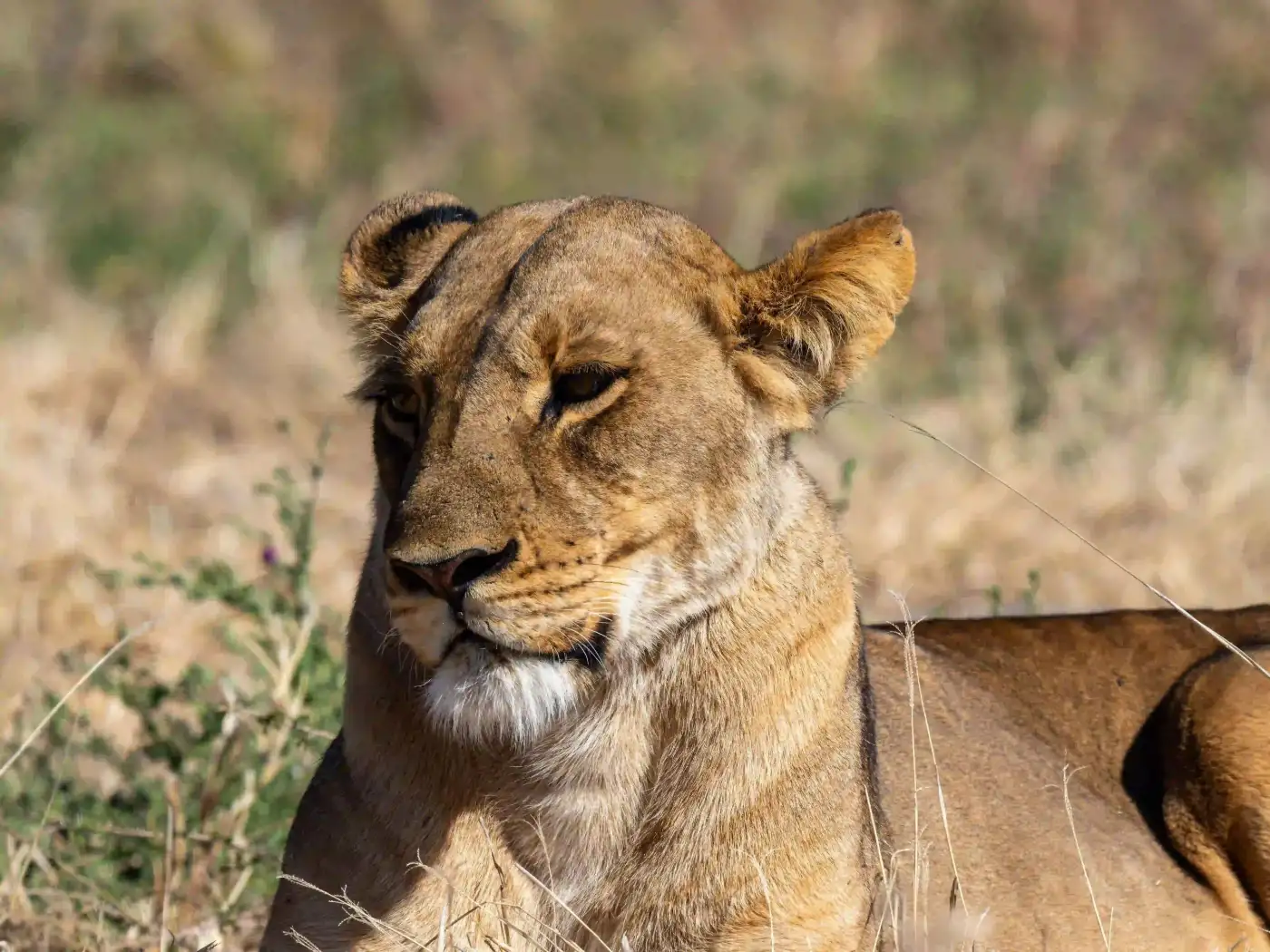
Lions may be resting in the grass, elephants might be moving towards a river, and leopards can remain almost invisible in the branches of a tree. Black rhinos present a different challenge altogether: they are rare, carefully protected and not always easy to find.
Fortunately, northern Tanzania brings together several exceptional wildlife destinations. The Serengeti offers vast plains and predator habitats, Ngorongoro Crater supports an extraordinary concentration of wildlife, and Tarangire is particularly rewarding for elephants.
This guide explains what the Big Five are, which Tanzanian parks are worth considering, when to travel and how to choose an itinerary that makes good use of your time.
What are Africa's Big Five?
The term Big Five refers to five African mammals: the lion, leopard, elephant, buffalo and rhinoceros.
The name originated during the era of big-game hunting, when these animals were considered particularly difficult and dangerous to hunt on foot. Today, it is most commonly used in wildlife tourism and photography. For modern safari travellers, seeing the Big Five should be about observing and appreciating wildlife in its natural habitat.
Meet the five animals
| Animal | What makes it distinctive | Important viewing consideration |
|---|---|---|
| African lion | Social big cat often living in prides | May be resting or concealed in vegetation |
| African leopard | Solitary, adaptable and highly elusive | Can be difficult to locate even in good habitat |
| African elephant | Largest living land mammal | Often seen in family groups and around feeding areas |
| African buffalo | Powerful herd-forming bovine | Frequently associated with grasslands and water |
| Black rhinoceros | Rare, threatened browsing mammal | Sightings require patience and favourable circumstances |
Each species has its own habitat preferences and behaviour. That is why visiting several ecosystems can create a more interesting safari than concentrating exclusively on one park.
Are the Big Five the only important animals on safari?
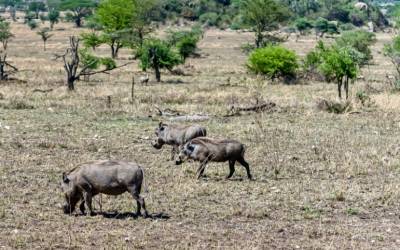
Certainly not. A Tanzania safari may also bring encounters with giraffes, cheetahs, zebras, wildebeest, spotted hyenas, hippos, antelopes and remarkable birdlife.
Sometimes the most memorable wildlife experience involves an animal that never appears on a Big Five checklist. A leopard resting in a tree can be fascinating. So can a giraffe feeding in the early morning, a group of elephants crossing a dusty track, or the movement of wildebeest across the plains.
A good safari allows time for these moments rather than turning every game drive into a race to tick off five species.
Where can you see the Big Five in Tanzania?
The Serengeti and Ngorongoro Crater are the two most important destinations to consider for a northern Tanzania Big Five safari. Tarangire adds particularly strong elephant-viewing opportunities and a contrasting landscape.
Combining these areas creates a varied wildlife experience without requiring visitors to travel between distant parts of the country.
Serengeti National Park
The Serengeti is one of Africa's best-known wildlife ecosystems. Its grasslands, woodland areas and river corridors support large populations of herbivores and the predators that depend on them.
For Big Five enthusiasts, the Serengeti is particularly attractive because of its lions and leopards. Lions may be encountered in open grasslands or near concentrations of prey. Leopards are more difficult to find and can spend long periods hidden in trees or dense vegetation.
Elephants and buffaloes also inhabit the park, and black rhinos survive within protected parts of the wider Serengeti ecosystem. However, rhino sightings in the Serengeti should never be treated as routine.
Why visit? The Serengeti rewards travellers who want more than a brief wildlife stop. Spending additional time here provides opportunities to explore different habitats, observe animal behaviour and enjoy the scale of the landscape. If you are also interested in the Great Wildebeest Migration, the best part of the park to visit will depend on the season.
Ngorongoro Crater
Ngorongoro Crater is one of Tanzania's most distinctive safari destinations. The volcanic caldera contains grassland, wetlands, woodland and other habitats within a relatively concentrated geographical area.
Its wildlife includes lions, buffaloes, elephants and black rhinos, alongside zebras, wildebeest, hyenas and many bird species. Leopards also inhabit the wider conservation area, although they are not easy to encounter on the crater floor.
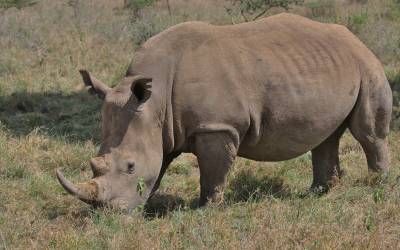
For many Big Five itineraries, Ngorongoro is especially important because of its black rhino population. These animals remain rare and protected. Visitors may sometimes see them across the open plains, but they can be distant, obscured or entirely out of view.
Why visit? Ngorongoro is well suited to travellers who want a focused wildlife drive alongside remarkable scenery. It is especially valuable when paired with a longer Serengeti stay. The crater is also worth visiting for its landscape and biodiversity even if a particular animal is not seen.
Tarangire National Park
Tarangire has a different character from the open Serengeti plains. Its ancient baobabs, seasonal river and woodland habitats make the landscape immediately recognisable.
The park is particularly famous for elephants, with dry-season conditions drawing many animals towards reliable water sources. Lions, leopards, buffaloes, giraffes and numerous antelope species also inhabit the area. Tarangire is not generally the park to choose if finding a rhinoceros is your main priority.
Why visit? Tarangire makes an excellent beginning or addition to a northern Tanzania itinerary. For travellers interested in elephants, landscapes and wildlife photography, it deserves careful consideration rather than being treated simply as a stop on the way to the Serengeti.
Lake Manyara National Park
Lake Manyara is sometimes included in northern circuit itineraries as an additional wildlife destination. Its groundwater forests, lake environment, birdlife and varied habitats provide a different experience from the Serengeti or Tarangire.
The park is known for elephants, buffaloes, baboons, birds and its association with tree-climbing lions. However, Lake Manyara should not be promoted as a reliable destination for seeing all five Big Five animals. It is better understood as a valuable supplementary park, especially for travellers who appreciate diverse landscapes and birdwatching.
Which park is best for each Big Five animal?
There is no single answer for every species. A park may provide suitable habitat without offering a reliable opportunity to see a particular animal on a short visit. The following table is a practical planning guide rather than a prediction of sightings.
| Animal | Where to prioritise | What to expect |
|---|---|---|
| Lion | Serengeti; Ngorongoro Crater | Good habitat, but encounters vary by day |
| Leopard | Serengeti; selected wooded habitats | Often elusive and difficult to photograph |
| Elephant | Tarangire; Serengeti | Herds and individual animals in varied landscapes |
| Buffalo | Ngorongoro Crater; Serengeti; Tarangire | Herds may be encountered during game drives |
| Black rhino | Ngorongoro Crater | Rare, potentially distant and never guaranteed |
Where are black rhinos most likely to be seen?
Ngorongoro Crater is an important choice for travellers who specifically hope to see a black rhino in northern Tanzania. The animals live within a protected landscape, but finding one still requires suitable conditions.
A distant rhino viewed through binoculars may be the closest encounter of the day. That is a normal wildlife-viewing experience, not a failed safari.
Where should I look for leopards?
The Serengeti offers suitable leopard habitat, including woodland and areas with trees. Leopards are solitary, and their spotted coats can make them remarkably difficult to distinguish from branches, shade and vegetation.
A knowledgeable guide can help identify likely habitats and signs of activity, but even a carefully planned game drive may not produce a sighting.
Where can I see large elephant herds?
Tarangire is widely recognised for elephant viewing, especially during the dry season. Elephants may gather near the river and move between feeding and drinking areas. Their movements change with the availability of water and vegetation.
The park also offers opportunities to observe elephant behaviour, including how family groups move and interact.
Ngorongoro vs Serengeti vs Tarangire: which should you choose?
The three destinations complement each other rather than compete.
| Feature | Serengeti | Ngorongoro Crater | Tarangire |
|---|---|---|---|
| Main attraction | Extensive wildlife landscapes and predators | Concentrated wildlife in a volcanic caldera | Elephants and baobabs |
| Lion viewing | Major reason to visit | Important resident population | Lions present |
| Leopard viewing | Worth prioritising | Possible but often difficult | Possible but elusive |
| Rhino focus | Rare and difficult | Important black rhino habitat | Not a primary rhino destination |
| Elephant viewing | Good opportunities | Possible | Particularly notable |
| Ideal approach | Allow multiple game drives | Plan a well-organised crater visit | Allow time to explore different habitats |
| Best for | Travellers wanting extensive safari time | Wildlife variety and rhino interest | Elephant lovers and landscape photography |
Choose the Serengeti if…
You want time to explore a large wildlife ecosystem and are especially interested in predators, migration-related wildlife or photography.
Choose Ngorongoro if…
You want to include an important black rhino habitat and experience the remarkable scenery of the crater.
Choose Tarangire if…
Elephants, baobabs and a contrasting wildlife landscape are among your main interests.
Choose all three if…
You have enough time to enjoy the journey without rushing between parks. For many travellers, this combination offers a satisfying balance of wildlife variety, scenery and opportunities to observe animals at different locations.
When is the best time for a Big Five safari in Tanzania?
June to October is generally a favourable period for wildlife viewing in northern Tanzania. However, the Serengeti and Ngorongoro can offer rewarding experiences throughout the year. The best season depends partly on which animals and experiences matter most to you.
June to October: the dry season
During the dry season, vegetation often becomes less dense and animals may concentrate around remaining water sources. This can make wildlife easier to locate, especially in destinations such as Tarangire.
The dry season is also popular with travellers, so some well-known game-drive areas and accommodation options can be busy.
November to December: changing landscapes
The short-rains period can bring greener vegetation and changing wildlife distributions. This may appeal to travellers interested in photography, birdlife and a different appearance of the landscape. Rainfall is variable, so an itinerary should allow for changing road and weather conditions.
January to March: green-season safari opportunities
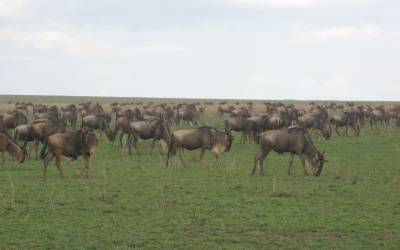
Parts of the Serengeti ecosystem become particularly interesting during the wildebeest calving period, generally centred around January and February. Predators may be active around concentrations of grazing animals.
However, the migration is a separate wildlife phenomenon from the Big Five, and travellers should not assume that visiting migration herds will automatically result in sightings of every Big Five species.
April to May: the wetter months
The longer rains can produce beautiful green landscapes and quieter visitor experiences. They can also create difficult road conditions, affect access and reduce visibility in dense vegetation. Some accommodation operations may be seasonal, making advance confirmation particularly important.
Seasons at a glance
| Period | General conditions | Why consider it | Main trade-off |
|---|---|---|---|
| June–October | Generally drier | Often easier wildlife viewing | Popular visitor period |
| November–December | Short rains and greener scenery | Changing landscapes and birdlife | Variable rainfall |
| January–March | Mixed green-season conditions | Calving-related wildlife in parts of Serengeti | Animal distribution varies |
| April–May | Generally wetter | Green scenery and potentially quieter areas | Rain and access considerations |
Important: Weather and wildlife movements do not follow an exact calendar. Ask your safari specialist to recommend the best locations for your specific travel dates.
How many days do you need for a Big Five safari?
A shorter safari can be rewarding, but travellers should consider how much of each day will be spent travelling between destinations.
Three-day safari
A three-day journey can introduce visitors to the northern circuit, especially with destinations closer to Arusha. However, fitting the Serengeti and several other parks into such a short period may create long transfer days and limited time for game viewing. A shorter itinerary should prioritise quality rather than attempting to cover every famous location.
Four- to five-day safari
Four or five days can provide more flexibility and a stronger balance between road travel and wildlife observation. The exact experience depends on the route, accommodation locations and whether internal flights are used.
Six- to seven-day safari
For many first-time visitors, six or seven days provides a more comfortable introduction to the Serengeti, Ngorongoro and Tarangire. A longer itinerary can include multiple Serengeti game drives, an appropriate Ngorongoro visit and time to appreciate Tarangire. It also creates some flexibility if wildlife is difficult to locate on a particular day.
Eight days or longer
Additional time allows travellers to explore more slowly, stay in different parts of the Serengeti or include specialised photography and cultural experiences. Longer does not automatically mean better. The itinerary should have a clear purpose and avoid unnecessary transfers.
| Duration | Practical planning approach | Best suited to |
|---|---|---|
| 3 days | Select nearby northern parks carefully | Travellers with limited time |
| 4–5 days | Focused combination of key destinations | Visitors balancing time and coverage |
| 6–7 days | Multi-park northern circuit | First-time visitors wanting a fuller safari |
| 8+ days | Slower exploration or additional interests | Wildlife enthusiasts and photographers |
These are general planning suggestions, not fixed package inclusions.
How much does a Big Five safari in Tanzania cost?
A Big Five safari does not have one standard price. The final cost depends on several important factors.
Safari duration
More days usually mean additional accommodation, guiding, vehicle and conservation-related expenses. A longer safari may also allow a less rushed route, so the cheapest daily cost is not always the best measure of value.
Accommodation category
Accommodation ranges from simpler lodges and camping arrangements to comfortable tented camps and luxury properties. Location matters as well. Staying inside or near a major wildlife area may affect how much driving is needed each day.
Number of travellers
On a private safari, the cost of a guide and vehicle is often shared between members of the travelling party. The price per person may therefore change significantly between solo travellers, couples and larger groups.
Season and availability
Accommodation rates can vary by travel period and availability. Travellers with fixed dates during popular months may benefit from planning well in advance.
Park fees and other charges
Conservation fees, vehicle charges, crater access, flights and taxes can affect the final price. Before paying a deposit, ask for a written quotation showing exactly what is included and excluded.
How to compare safari quotations
Do not compare two itineraries only by their headline price. Check the following:
- Total number of days and nights.
- Actual parks visited and time allocated to each.
- Accommodation names and meal arrangements.
- Private versus shared vehicle.
- Park fees and crater-related charges.
- Domestic flights and airport transfers.
- Drinking water, guiding and other inclusions.
- Payment conditions and cancellation terms.
Travel tip: A lower quotation may represent a different experience rather than the same safari at a better price. Compare the itinerary details before deciding.
Practical tips for planning your Big Five safari
Tell your guide which animals matter most
Some travellers are particularly interested in elephants. Others hope to photograph a leopard or see a black rhino. Sharing these priorities helps your safari team understand your expectations and develop a suitable itinerary. It does not allow anyone to control wildlife movements, but it improves the planning conversation.
Spend enough time in the right habitats
One of the most common safari planning mistakes is visiting too many parks too quickly. A long list of destinations may look impressive on paper but leave little time for actually watching animals. Consider reducing the number of stops if it means having a more rewarding experience in each location.
Bring binoculars
Binoculars are especially useful when observing distant animals, identifying birds and looking across wide landscapes. They can be valuable in Ngorongoro, where a rhino may be visible at considerable distance.
Be patient with predators
Lions and leopards may rest for long periods, remain concealed or move away before a vehicle reaches them. Good wildlife observation is not always dramatic. Quiet moments can reveal behaviour that rushed travellers miss.
Listen to your guide
Follow instructions about remaining inside the vehicle, keeping a safe distance and avoiding behaviour that disturbs animals. Never ask a guide to drive off permitted routes or approach wildlife dangerously for a photograph.
Prepare for changing temperatures
Northern Tanzania can have warm afternoons and cool early mornings, especially at higher elevations such as the Ngorongoro rim. Pack comfortable layers, sun protection and appropriate footwear.
Keep your photography expectations realistic
A clear photograph of a leopard or rhino may require patience, suitable equipment and favourable viewing conditions. Avoid making photography the only measure of a successful safari. A respectful, distant encounter is preferable to disturbing wildlife in pursuit of a close-up image.
Common Big Five safari planning mistakes
| Common mistake | Why it creates problems | Better approach |
|---|---|---|
| Expecting all five animals in one day | Wildlife sightings are unpredictable | Allow multiple opportunities across suitable habitats |
| Assuming every park has reliable rhino sightings | Black rhinos are rare and unevenly distributed | Include Ngorongoro when rhinos are a priority |
| Choosing too many parks in too few days | Transfers can replace valuable game-drive time | Build a focused route |
| Booking solely around migration dates | Migration and Big Five viewing are different goals | Decide which experiences matter most |
| Comparing tours only by price | Inclusions and quality can differ | Check a complete written itinerary |
| Booking accommodation without checking location | Long daily transfers can reduce wildlife time | Compare lodging locations as well as categories |
| Expecting close animal encounters | Wildlife must be observed safely | Carry binoculars and respect viewing distances |
| Assuming a famous park guarantees sightings | Animal movements change constantly | Maintain realistic expectations |
A simple planning checklist
Six to twelve months before travel
- Decide on your preferred safari duration.
- Identify your main wildlife interests.
- Choose an approximate travel period.
- Discuss your intended budget and accommodation preferences.
- Request preliminary itinerary options.
Two to three months before travel
- Confirm your route, accommodation and booking arrangements.
- Check the applicable entry and health requirements with authoritative sources.
- Review travel insurance and relevant cover.
- Make sure your operator has confirmed the important inclusions and exclusions.
- Discuss any mobility, dietary or other practical needs.
During the final two weeks
- Reconfirm arrival arrangements and meeting details.
- Check baggage allowances, especially where small aircraft are involved.
- Prepare binoculars, clothing layers, medication and charging equipment.
- Save your guide's contact information and essential booking documents.
- Review any updated travel or safety information.
What should you ask a local safari expert?
The strongest itinerary often begins with a few practical questions rather than a fixed list of attractions. Before confirming a Big Five safari, ask the Wonders of Creation team:
- How much actual game-drive time does this route provide?
- Where will we stay in relation to the Serengeti and Ngorongoro?
- Which parks are most appropriate for our travel month?
- If spotting a black rhino is a priority, how should we structure the itinerary?
- What changes would improve the trip if we added one extra day?
- What are the exact exclusions, park charges and booking conditions?
Recommended Tanzania safari experiences
Wonders of Creation Tours & Safaris offers northern Tanzania itineraries that can be considered by travellers interested in the Big Five.
6 Days – Tanzania Big Five Safari
This itinerary is particularly relevant to the subject of this guide. The published route covers Tarangire, Lake Manyara, the Serengeti and Ngorongoro, bringing together several different ecosystems. It may suit travellers who want a dedicated multi-day introduction to Tanzania's major wildlife destinations.
Explore the 6-day Tanzania Big Five Safari
5-Day Wildebeest Migration Safari from Zanzibar
For travellers already staying in Zanzibar, this itinerary combines a beach-holiday departure point with a northern Tanzania wildlife journey. The published package includes the Serengeti, Ngorongoro and Tarangire, along with Lake Manyara. It may be a useful option for visitors who want to combine Zanzibar and mainland wildlife experiences.
Explore the 5-day safari from Zanzibar
3-Day Budget Tanzania Safari
This shorter itinerary includes Tarangire, Lake Manyara and Ngorongoro Crater. It can be considered by travellers with limited time who want a northern Tanzania wildlife experience. Because it does not include the Serengeti, it should not be presented as equivalent to a longer Serengeti-focused Big Five itinerary.
Explore the 3-day budget Tanzania safari
Planning note: Package availability, accommodation, itinerary details and prices should be reconfirmed directly before booking.
Final thoughts: plan for the wildlife experience, not just the checklist
The Big Five are a remarkable introduction to Tanzania's wildlife, but they are only part of what makes a safari worthwhile.
The Serengeti offers the scale and variety of an extraordinary wildlife ecosystem. Ngorongoro Crater combines unusual geology with important protected wildlife habitat. Tarangire adds memorable elephant encounters and a landscape shaped by baobabs and seasonal water.
Choosing the right combination depends on your time, interests and expectations. A thoughtful itinerary gives you opportunities to search for the animals you most want to see while leaving room to appreciate everything else that happens along the way.
Not sure how many days you need, which parks to combine or when to travel? Explore our Tanzania safari packages or ask our team to plan a safari around your dates.
Related safaris and tours
Plan your trip with us
Our team in Arusha builds your trip around your dates, interests and budget – by form, email or WhatsApp.