


Key takeaways
- A game drive is a wildlife-viewing journey made in a vehicle through a national park, reserve or other authorised wildlife area.
- Early mornings and late afternoons can be particularly rewarding because temperatures are cooler and many animals are active.
- A good drive includes frequent stops. Wildlife observation is about patience and understanding animal behaviour, not covering the greatest distance.
- Professional guides help identify animals, interpret their behaviour, navigate suitable routes and follow safety regulations.
- Wildlife sightings cannot be guaranteed. Lions, leopards, elephants and other animals move freely in their natural habitats.
- Night game drives are not universally permitted. They require authorisation and must follow the rules of the particular protected area.
- You normally remain inside the safari vehicle, except at designated places or when explicitly permitted during an authorised activity.
- The best game drive is one that gives you sufficient time, a suitable vehicle, an experienced guide and realistic expectations.
Quick facts
| What is a game drive? | Watching wild animals from a vehicle in their natural habitat |
|---|---|
| Where does it take place? | National parks, reserves and other authorised wildlife areas |
| Typical vehicle | Safari 4×4, often with a pop-up roof |
| Who leads the drive? | Usually a professional safari driver-guide |
| Best time of day | Often early morning and late afternoon |
| Typical duration | From a few hours to most of the day |
| Are wildlife sightings guaranteed? | No |
| Can you leave the vehicle? | Only where permitted |
| Are night drives available? | Only in approved locations under applicable rules |
| What should you bring? | Binoculars, camera, water, sun protection and clothing layers |
| Is it suitable for beginners? | Yes, with appropriate planning |
| Is it suitable for children? | Generally, subject to activity and operator requirements |
The safari vehicle slows to a stop. Your guide has noticed something beside the track, but from your seat, all you can see is dry grass and a few scattered bushes.
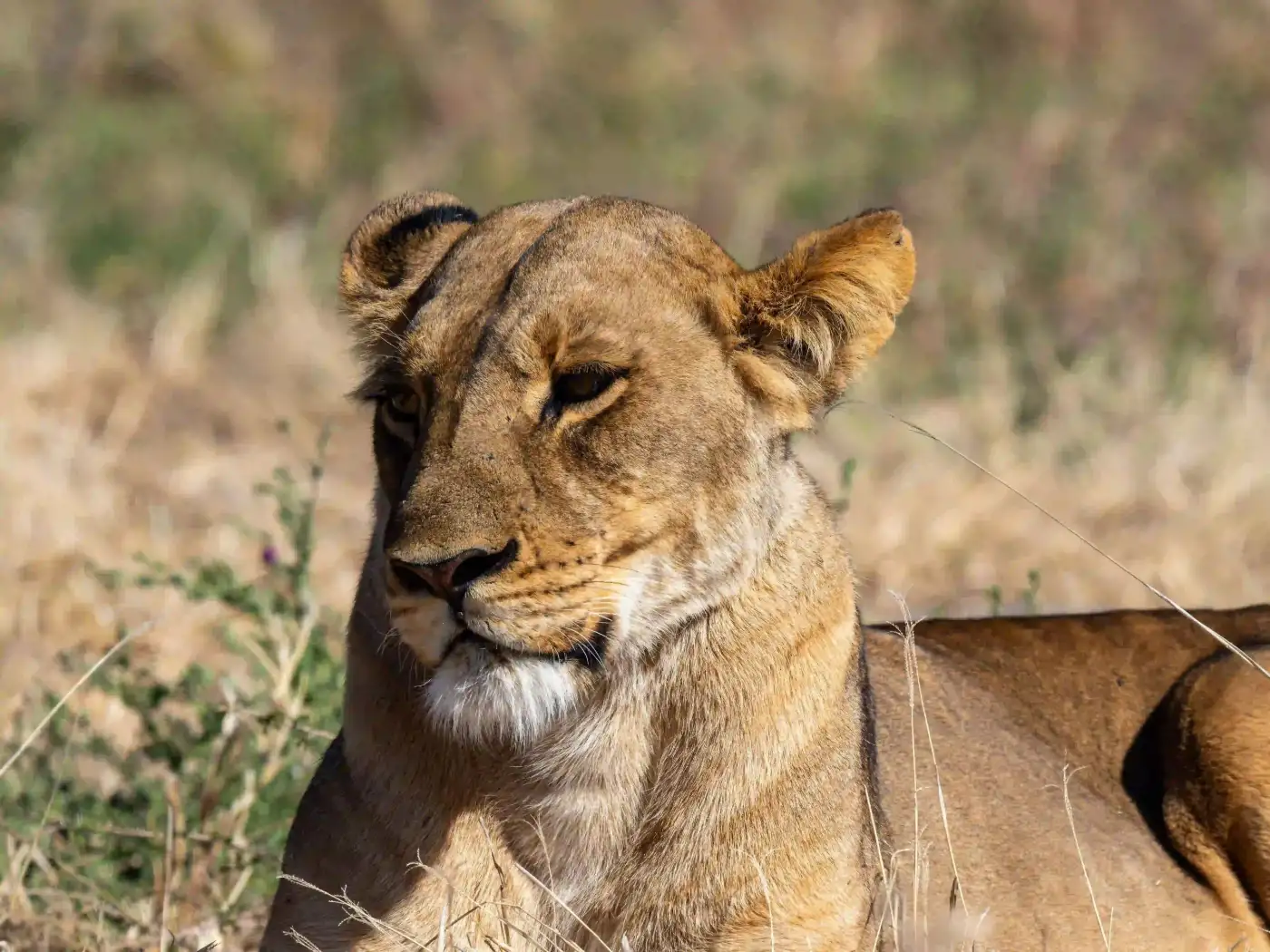
Then you spot it: a lion resting in the shade, almost perfectly camouflaged against the earth.
For the next few minutes, nothing particularly dramatic happens. The lion stretches, lifts its head and settles down again. Your guide explains what to look for, points out the direction of the wind and gives everyone time to watch.
That quieter moment captures something important about a game drive. It isn't a wildlife performance, and there is no timetable for animal sightings. Much of the experience involves searching, listening, learning and occasionally being surprised by what appears.
If you're planning your first safari, understanding how a game drive works will help you choose the right trip, prepare comfortably and enjoy the experience without unrealistic expectations.
This guide explains what actually happens on a game drive in Tanzania, including the different types of drives, the role of your guide, wildlife-viewing opportunities, safety rules and the practical details that are easy to overlook.
What Is a Game Drive Safari?
A game drive is a guided wildlife-viewing activity in which visitors travel through a natural habitat in a vehicle, searching for and observing wild animals.
It is one of the most common activities on a Tanzania safari.
Despite the name, the purpose isn't simply to drive around a national park. The aim is to observe wildlife responsibly, understand its behaviour and experience the surrounding ecosystem.
Why is it called a game drive?
The word game comes from older hunting terminology used to describe certain wild animals.
Today, in photographic safari tourism, a game drive generally refers to observing and photographing wildlife rather than hunting it.
The activity takes place under the rules of the relevant national park, conservation area or wildlife reserve.
What makes a game drive different from an ordinary road trip?
On an ordinary road trip, the destination is usually the main objective.
On a game drive, the journey itself is the activity.
Your guide may stop to watch a herd of elephants, examine the surroundings for signs of predators or identify birds along a river.
Sometimes the vehicle remains in one place for a considerable period. At other times, the guide moves between habitats to look for different animals.
You might spend ten minutes watching a giraffe feed from an acacia tree or remain much longer observing a pride of lions.
Neither approach is automatically better. The right decision depends on the animals, their behaviour, the conditions and what the group hopes to experience.
What is the difference between a safari and a game drive?
A safari is the broader journey or travel experience. It may include transport, accommodation, game drives, nature walks, boat activities and visits to several destinations.
A game drive is one particular activity within that safari.
For example, a six-day Tanzania safari might include multiple morning and afternoon game drives across the Serengeti, Tarangire and Ngorongoro.
What Actually Happens During a Typical Game Drive?
Every game drive is different, but most follow a recognisable sequence.
The exact schedule depends on the park, accommodation location, permits, travel conditions and the type of safari you have booked.
Step 1: Preparing for departure
For an early morning game drive, the day may begin before sunrise.
You get dressed, collect your camera and binoculars, and meet your guide at an agreed location.
Some lodges provide tea, coffee or a light breakfast before departure. Others arrange a packed breakfast or serve a full meal when you return.
Your guide should explain the plan for the drive and any important safety instructions.
If you are staying outside a protected area, reaching the park gate may be the first part of the journey. That transfer is not necessarily game-viewing time.
Step 2: Entering the wildlife area
At the entrance, the operator completes the relevant permit or entry procedures. The guide then follows authorised roads and tracks into the park.
You may see wildlife almost immediately. Alternatively, the first part of the drive may be quiet.
That is normal. Wild animals are not evenly distributed throughout a park, and their locations change with rainfall, vegetation, temperature and available food.
Step 3: Searching for wildlife
Your guide drives slowly through suitable habitats, watching the surroundings for movement and other signs.
You may notice that the guide looks at areas you would otherwise ignore. A shadow beneath a tree, birds reacting to a disturbance or animals staring in one direction can all be worth investigating.
Your guide may stop the vehicle to scan with binoculars or listen.
The search is not always dramatic. Sometimes the most useful decision is simply to wait.
Step 4: Stopping at a wildlife sighting
When an animal is located, the guide chooses an appropriate position for observing it.
The vehicle should remain at a safe distance without blocking the animal's movement.
At this point, you can use binoculars, take photographs or simply watch. Your guide may explain what the animal is doing and what behaviour is worth noticing.
For example, elephants may be feeding, resting or moving together as a family group. A leopard might remain almost motionless in a tree. A group of antelopes may react to a sound or movement that isn't immediately obvious to visitors.
Some sightings last only a few moments. Others allow extended observation.
Step 5: Continuing between different habitats
A game drive may pass through grassland, woodland, riverine areas or wetland environments. Different habitats provide opportunities to encounter different species.
Open grasslands can make some animals easier to spot, while dense vegetation may conceal wildlife even when it is nearby.
Your guide may suggest visiting a different area if conditions are more suitable there.
Step 6: Taking an authorised break
Longer game drives often include a break at a designated picnic site or another permitted stopping point.
You may have a packed lunch, use the available facilities and stretch your legs where it is safe and authorised.
Do not assume you can step outside the vehicle whenever you feel like it. Even apparently quiet areas may have dangerous animals nearby.
Step 7: Returning to camp or accommodation
The final part of the drive may lead back to your lodge, camp or park exit.
Your guide must account for applicable park hours, travel time and safety requirements.
Back at the accommodation, you may have time to rest, review photographs or prepare for another activity. The day may end with dinner and a conversation about the animals you encountered.
An illustrative morning game-drive schedule
| Approximate time | Example activity | What to expect |
|---|---|---|
| 5:30–6:00 am | Wake up and prepare | Clothing, equipment and light refreshments |
| 6:00–6:30 am | Departure | Early wildlife viewing where park rules permit |
| 6:30–8:30 am | Game drive | Exploring suitable habitats and observing wildlife |
| 8:30–9:00 am | Short break | Breakfast or refreshments at an authorised location |
| 9:00–10:30 am | Continued viewing | More stops, photography and interpretation |
| 10:30–11:00 am | Return | Drive back to camp or lodge |
Important: This is a planning example, not a fixed timetable offered by Wonders of Creation Tours & Safaris. Actual departure times depend on park rules, accommodation arrangements and your confirmed itinerary.
Morning, Afternoon, Full-Day and Night Game Drives
Game drives can be organised in several ways. The most suitable option depends on your interests, accommodation location and the activities authorised in the destination.
Early morning game drive
Morning drives are popular because conditions are often cooler and some wildlife may be more active. The softer morning light is also attractive for photography.
If you are hoping to observe predators, an early departure can be useful, although there is no guarantee that lions, leopards or other carnivores will be moving when you arrive.
In cooler conditions, you may also see grazing animals feeding before the day becomes hotter.
Best for: Wildlife enthusiasts, photographers and travellers comfortable with early starts.
Afternoon game drive
An afternoon drive may begin after a rest period at your camp or lodge.
Animals that spent the hottest part of the day resting may become more active as temperatures fall. The late-afternoon light can make landscapes and wildlife particularly attractive to photograph.
However, your guide must finish the drive within the operating hours of the protected area.
Best for: Travellers who enjoy relaxed mornings, afternoon wildlife viewing and warm photographic light.
Full-day game drive
A full-day drive keeps you in the wildlife area for much of the day, usually with a packed lunch and appropriate breaks.
This can be useful when the park is large, your main wildlife interests are far from the accommodation or returning for lunch would involve unnecessary travel.
A full day does not mean wildlife activity remains constant. There may be long periods of observation, quiet driving or rest.
Best for: Visitors exploring extensive parks, serious wildlife enthusiasts and photographers.
Night game drive
Night drives offer a different experience because some animals become active after dark. Depending on the location, visitors may look for nocturnal mammals and observe behaviour that is less likely to be encountered during ordinary daytime game drives.
However, night drives are not automatically allowed in every Tanzanian national park.
Tanzania National Parks publishes special guidelines for authorised night game drives, including requirements relating to vehicles, guides, rangers, lighting and permits. Where an activity is authorised under those guidelines, it is scheduled between 7:00 pm and 11:00 pm.
The particular park and route must be approved. A regular daytime safari booking should never be assumed to include a night drive.
Best for: Travellers interested in nocturnal wildlife, where the activity is lawfully available.
Game-drive types compared
| Game-drive type | Main advantage | Main consideration |
|---|---|---|
| Early morning | Cooler conditions and softer light | Requires early departure |
| Afternoon | Changing light and wildlife activity | Limited by operating hours |
| Full day | More time exploring distant habitats | Can be tiring and requires planned breaks |
| Night | Opportunity to observe nocturnal wildlife | Special permissions and location restrictions |
How Long Does a Game Drive Last?
A game drive may last a few hours or occupy much of the day. There is no universal duration that applies to every safari destination.
Half-day game drives
A half-day activity may involve approximately three to four hours of game viewing, but this varies. It can be suitable for travellers with limited time, families or visitors who prefer shorter excursions.
Full-day game drives
Full-day activities may involve several hours of wildlife observation, combined with driving between locations and breaks. A full-day drive can be especially useful when exploring large parks such as the Serengeti.
Multi-day safaris
On a multi-day safari, game drives may be scheduled on consecutive days or combined with transfer journeys. Your overall safari could include several shorter drives or a mixture of morning, afternoon and full-day outings.
The important question: how much time will you actually spend viewing wildlife?
An itinerary may advertise a full day of safari activities while including a long road transfer to reach the park.
That does not necessarily make the itinerary unsuitable. It does mean you should distinguish between travel time and wildlife-viewing time.
Before booking, ask:
- How much time is expected inside the park?
- Is the drive a dedicated wildlife activity or part of a transfer?
- Will we return to our accommodation for lunch?
- How far is the accommodation from the game-drive area?
- Are there separate morning and afternoon drives?
The answers will help you understand the experience more accurately than a simple label such as “full-day safari.”
Which Animals Might You See on a Game Drive?
Tanzania's national parks support an extraordinary variety of mammals, birds, reptiles and other wildlife. What you encounter depends on the destination, habitat, season and chance.
Lions
Lions are among the animals many first-time safari visitors hope to see. They may be resting, moving through grassland or interacting with other members of their pride.
Seeing a lion is possible in several Tanzanian parks, but it cannot be promised.
Leopards
Leopards are generally more elusive. They may rest in trees, move through woodland or remain concealed in vegetation.
Even an experienced guide cannot guarantee a leopard sighting.
Elephants
Elephants can be particularly memorable because of their size and social behaviour. You might observe them feeding, drinking, crossing a track or moving together in family groups.
Tarangire is especially well known for elephant viewing.
Giraffes
Giraffes are often easier to notice in woodland and open habitats where they feed on trees and shrubs. Watching how they move and browse can be as interesting as taking photographs.
Buffaloes, zebras and antelopes
Buffaloes, zebras, wildebeest and different antelope species are important parts of many safari ecosystems. Their behaviour can also provide useful information about the surrounding environment.
Cheetahs and spotted hyenas
Cheetahs may be encountered in suitable open habitats, while spotted hyenas occur in several important Tanzanian wildlife areas. The appearance of either species depends on local conditions and animal movements.
Rhinoceroses
Black rhinos are rare and protected. Ngorongoro Crater is an important northern Tanzania habitat, but sightings may be distant or may not occur at all.
Birds and smaller animals
A game drive is not only about large mammals. You may encounter colourful bee-eaters, hornbills, birds of prey, ostriches, reptiles and numerous other species.
Some of the most interesting wildlife observations involve animals that receive much less attention than the Big Five.
What could you see in different parks?
| Destination | Wildlife interests | What makes the experience different |
|---|---|---|
| Serengeti National Park | Lions, leopards, cheetahs, large herbivores | Open savanna and varied wildlife habitats |
| Tarangire National Park | Elephants, buffaloes, giraffes, birds | Baobabs and seasonal river habitats |
| Ngorongoro Crater | Black rhino habitat, lions, buffaloes, hippos | Concentrated wildlife in a volcanic caldera |
| Lake Manyara National Park | Elephants, monkeys, birds and other mammals | Forest, lakeshore and Rift Valley scenery |
| Arusha National Park | Giraffes, buffaloes, monkeys, birds | Mountain, forest and lake habitats |
| Nyerere National Park | Elephants, hippos, crocodiles, wild dogs and birds | River environments and varied safari activities |
Remember that species presence is not the same as a reliable sighting on a particular day.
Where Are the Best Places for Game Drives in Tanzania?
The best park for your game drive depends on what you want to experience.
Serengeti National Park: expansive wildlife viewing
The Serengeti is ideal for travellers who want to explore a large savanna ecosystem. Its size provides opportunities for different game-drive routes, depending on where you stay.
If your main interest is the Great Wildebeest Migration, the most suitable section of the ecosystem varies with the season and animal movements.
For a relaxed visit, allow enough time for multiple drives rather than fitting the park into an extremely short road itinerary.
Tarangire National Park: elephants and baobabs
Tarangire is a rewarding option for first-time safari travellers. Its elephant populations and distinctive landscapes are major attractions.
The park also supports predators, giraffes, buffaloes and extensive birdlife. For visitors staying in Arusha with limited time, Tarangire is a practical destination to consider.
Ngorongoro Crater: wildlife in a remarkable landscape
A game drive on the Ngorongoro Crater floor offers an experience quite different from the Serengeti. The crater supports varied habitats within a comparatively concentrated area. It is also an important location for black rhino conservation.
Driving on the crater floor is regulated by the Ngorongoro Conservation Area Authority. Visitors must follow authorised routes and the applicable rules for accessing the crater.
Lake Manyara National Park: forest and birdlife
Lake Manyara is well suited to travellers interested in varied vegetation, birds and a different landscape. Some wildlife may be concealed within dense forest.
The park's association with tree-climbing lions is well known, but sightings should not be treated as guaranteed.
Nyerere National Park: an alternative safari experience
Nyerere offers extensive wildlife areas associated with the Rufiji River system. A conventional game drive can be combined with other authorised activities where available.
For visitors interested in a southern Tanzania itinerary, it provides a different experience from the northern circuit.
What Is a Tanzania Safari Vehicle Like?
Many organised Tanzanian road safaris use a four-wheel-drive vehicle designed or adapted for wildlife viewing.
A common arrangement is a 4×4 with a pop-up roof that allows passengers to observe and photograph animals while the vehicle is stopped. Other settings may use open-sided safari vehicles or different suitable designs.
What is the purpose of a pop-up roof?
A raised roof can make it easier to look across vegetation and photograph animals from inside the vehicle. It also provides shelter when lowered.
The roof configuration is useful, but it does not mean passengers should stand while the vehicle is moving. Follow the driver's instructions on when and how to use the viewing openings.
How many people travel in one vehicle?
That depends on the operator and vehicle configuration. Some safaris are private, while others are shared.
Before booking, ask how many passengers will be seated in the vehicle and whether everyone has a suitable view.
If you are travelling with a large camera lens, ask whether there is enough room to use it comfortably without obstructing other guests.
Are safari vehicles comfortable?
Safari vehicles are built to handle rougher conditions than an ordinary car, but park roads can still be dusty and bumpy. Long drives can be tiring.
Passengers with back problems, mobility limitations or other comfort requirements should discuss the route and vehicle in advance. A suitable itinerary may involve shorter game drives, additional breaks or accommodation closer to the park.
Questions to ask about your vehicle
Before booking, confirm the type of 4×4, seating arrangement, roof configuration, maximum passengers and whether the operator provides drinking water or charging facilities.
Do not assume every vehicle has the same equipment.
How Do Safari Guides Find Wildlife?
An experienced guide contributes much more than driving the vehicle.
A good guide combines knowledge of animal behaviour, habitats, road conditions, protected-area regulations and the interests of the travelling group.
Reading the landscape
Wildlife distribution is influenced by vegetation, water, food and weather conditions. A guide may choose one route over another because it passes through habitat associated with particular species.
For example, a river corridor may offer different opportunities from a wide-open grassland.
Looking for signs of activity
Animal tracks, movements of nearby species and changes in bird behaviour can provide clues. However, these signs require careful interpretation.
Not every alarm call indicates a predator, and not every track leads to an animal that can be found.
Listening and observing
A guide may stop the engine to listen or allow the group to observe an animal without disturbance. Silence can be especially useful when watching wildlife behaviour.
Using local and current information
Guides may exchange information through permitted communication channels or use their knowledge of recent animal activity.
Still, a sighting that occurred earlier may no longer be available when another vehicle arrives. Wild animals move freely.
Explaining the behaviour you see
A knowledgeable guide can make a seemingly ordinary sighting more meaningful. A giraffe feeding, a buffalo herd resting or elephants communicating through body language can all reveal interesting aspects of the ecosystem.
A good wildlife guide encourages curiosity beyond a checklist of animals.
Questions that make a game drive more interesting
Try asking your guide:
- What does this animal normally eat?
- Why is it using this habitat?
- What does its body language suggest?
- How can we tell the difference between similar species?
- Why do certain animals gather near water?
- What changes in this landscape during the rainy season?
These questions can turn a brief encounter into a memorable learning experience.
Game Drive Safety Rules: What Should Travellers Know?
A game drive takes place around wild animals in their natural habitat. Safety depends on respecting the animals, following the relevant rules and listening to trained personnel.
Stay in the vehicle unless permitted
Do not leave the vehicle simply because the surrounding area looks empty. Wildlife may be concealed nearby.
Only use designated stopping areas or locations where your guide has confirmed that getting out is allowed.
Do not feed wild animals
Feeding wildlife can change animal behaviour and create risks for animals and people. Never throw food from the vehicle or attempt to attract an animal for a photograph.
Keep noise to a minimum
Loud voices, music and unnecessary disturbances can affect wildlife and other visitors. Speak quietly near animals and respect opportunities for peaceful observation.
Respect safe distances
Wild animals can behave unpredictably. A lion, elephant or buffalo may appear calm before reacting to a perceived threat.
Your guide should maintain appropriate distances and avoid blocking animals' movement.
No unauthorised off-road driving
Tanzania National Parks requires visitors to use authorised roads and tracks unless specific permission applies. Do not ask a guide to ignore this rule to reach a leopard or improve a photograph.
Similarly, Ngorongoro prohibits ordinary off-road driving without appropriate authorisation.
Observe park hours
Parks and conservation areas operate under specific access rules. Your guide must follow those requirements and plan the drive accordingly.
Night driving is only permitted when the relevant authority has approved the activity.
Avoid dangerous photography
Do not lean far outside the vehicle, stand while it is moving or position yourself in a way that could cause injury. Keep camera equipment secure.
Ask before using flash or other lighting near wildlife, especially at night.
Game-drive etiquette checklist
- Remain in the vehicle except where authorised.
- Follow your guide's safety instructions.
- Keep a respectful distance from animals.
- Never feed or disturb wildlife.
- Do not throw litter from the vehicle.
- Avoid unnecessary noise.
- Respect other safari vehicles and visitors.
- Do not pressure your guide to break park rules.
- Put wildlife welfare before photographs.
What Should You Wear and Bring on a Game Drive?
Comfort matters because you may spend several hours in a vehicle, sometimes on uneven tracks and in changing temperatures.
Clothing
Choose comfortable clothing that allows you to sit and move easily. Neutral or muted colours are practical for wildlife outings, although specialist camouflage clothing is not required for a normal vehicle-based safari.
Bring a light warm layer for early morning departures. At higher elevations, such as around the Ngorongoro rim, mornings can be noticeably cooler than afternoons.
A hat and sunglasses can also be useful.
Sun and weather protection
Carry appropriate sunscreen. A lightweight rain jacket may be helpful during wetter periods.
Dust can be an issue on dry roads, so a scarf or protective bag for camera equipment may be useful.
Binoculars
Binoculars are one of the most worthwhile items to bring. Some animals are naturally far from the road, and protected-area rules may prevent vehicles from approaching more closely.
You don't need expensive equipment to enjoy the benefit of being able to observe a distant animal.
Camera and phone
Bring sufficient battery power and storage space. A camera with an optical zoom can be useful for distant wildlife. However, a phone can still capture landscapes and closer, safe sightings.
Avoid becoming so focused on photographs that you miss the behaviour happening in front of you.
Water and personal necessities
Bring drinking water and any personal medication you may need. If you have specific health or mobility concerns, discuss them before the safari so that appropriate arrangements can be considered.
Packing checklist
| Item | Why it helps | Priority |
|---|---|---|
| Binoculars | Distant wildlife observation | Highly recommended |
| Camera or phone | Photographs and video | Optional |
| Spare battery or power bank | Longer outings | Useful |
| Sun hat | Protection from sunlight | Recommended |
| Sunscreen | Sun protection | Recommended |
| Warm layer | Cool mornings | Recommended |
| Lightweight rain jacket | Changing weather | Seasonal |
| Comfortable shoes | Travel and authorised stops | Recommended |
| Drinking water | Hydration | Essential |
| Personal medication | Individual needs | Essential where applicable |
| Small day bag | Keeps belongings organised | Useful |
Are Game Drives Suitable for Children and First-Time Travellers?
A game drive can be suitable for families and people with little experience of wildlife travel. However, the most appropriate duration and route depend on the passengers.
First-time safari travellers
If you've never been on safari, begin with realistic expectations. A game drive is not a zoo visit.
You might see several large mammals in quick succession, or spend considerable time searching before finding your next interesting animal. Both situations are part of the experience.
Allow yourself to appreciate the landscape, birds and smaller wildlife along the way.
Families with young children
Children may enjoy watching elephants, giraffes and zebras, but long periods of sitting can become difficult.
A private safari can offer greater flexibility for breaks and pacing, although shared trips may also be appropriate. Check age restrictions, vehicle seating arrangements and activity conditions with the operator.
Older travellers
A game drive does not usually require strenuous physical activity, but long days and rough roads may be uncomfortable for some people.
Discuss your needs with the operator, including whether shorter drives or more convenient accommodation would improve the experience.
Wildlife photographers
Photographers may prefer an itinerary that includes repeated drives in the same habitat. Being able to wait quietly at a suitable sighting can be more valuable than visiting many destinations in quick succession.
Game drive or walking safari?
A game drive covers larger distances and provides a practical way to observe a range of wildlife habitats.
An authorised walking safari focuses on experiencing the environment on foot, including tracks, plants and smaller natural details. Walking involves different safety requirements and is not available everywhere.
Both experiences can complement one another. For a detailed comparison, see our German-language guide Walking Safari vs. Game Drive – Welche Safari passt wirklich zu dir?
How Much Does a Game Drive Safari Cost?
The cost depends on whether the drive is part of a larger safari package or booked as a separate excursion. There is no single universal game-drive price across Tanzania.
Park and conservation fees
Different protected areas have different entry charges. Some activities may have additional fees, permits or vehicle charges. Always use current official schedules when evaluating a quotation.
Safari vehicle and guide
Private vehicle arrangements can be more expensive per person for smaller groups. Shared departures may spread costs between more travellers. The type of vehicle and guide arrangements should be clear.
Game-drive duration
A full-day excursion and a shorter outing may involve different costs. However, a longer advertised duration does not automatically mean more wildlife sightings.
Accommodation and meals
On a multi-day safari, game drives may be included with accommodation, meals and other services. On a day trip, a packed lunch, park fees and transfers may or may not be included.
Additional activities
Night game drives, walking safaris, balloon flights and boat excursions should not be assumed to be included in an ordinary safari package. They may require separate bookings and payments.
Questions to ask about the price
Before confirming, ask whether the quote includes:
- Park and conservation-area entry fees.
- The vehicle and professional driver-guide.
- Pickup and return transfers.
- Meals and drinking water.
- All scheduled game drives.
- Additional permits for special activities.
- Relevant taxes and charges.
- The applicable cancellation conditions.
Ask for a written breakdown if anything is unclear.
Common Mistakes During a Game Drive
| Mistake | Why it causes problems | Better approach |
|---|---|---|
| Expecting every animal to appear | Wildlife movements are unpredictable | Enjoy the overall ecosystem |
| Asking the guide to drive faster | Speed increases risks and can reduce observation quality | Allow time to look carefully |
| Leaving the vehicle without permission | Dangerous animals may be nearby | Use authorised stopping locations |
| Feeding wildlife | Changes animal behaviour and creates risk | Never feed wild animals |
| Making excessive noise | Can disturb animals and other visitors | Keep voices and devices quiet |
| Focusing only on the Big Five | Many interesting sightings are overlooked | Observe birds, smaller mammals and behaviour |
| Forgetting binoculars | Distant wildlife becomes harder to appreciate | Bring a suitable pair |
| Comparing drives only by hours | Some advertised time is spent on transfers | Ask about actual game-viewing time |
| Demanding off-road access | May violate protected-area regulations | Respect authorised tracks |
| Assuming night drives are always available | Activities require specific permissions | Confirm location, permits and availability |
The biggest mistake: treating wildlife as a checklist
It's natural to arrive with particular animals in mind. But a safari can be rewarding even when an elusive leopard remains hidden or a black rhino never appears.
Taking time to watch a herd of elephants interact can be more meaningful than rushing past them in pursuit of another species.
A thoughtful game drive leaves room for unexpected discoveries.
Practical Planning Tips for a Better Game Drive
Choose the right park for your interests
If you particularly want to see elephants, consider Tarangire. If you want extensive savanna wildlife and predators, the Serengeti may be appropriate. If you are interested in a concentrated wildlife experience with distinctive scenery, Ngorongoro deserves consideration.
The best destination depends on the season and your broader itinerary. Our guide on how to choose a Tanzania safari tour compares the main parks in more detail.
Give yourself enough time
A short drive can still be rewarding. However, multiple game drives create opportunities to explore different areas and observe changing conditions.
This can be especially helpful for photographers and visitors interested in elusive species.
Consider the accommodation location
The distance between your accommodation and the game-drive area affects the schedule. Staying closer to the relevant area may reduce transfers, although accommodation costs and availability vary.
Ask about private versus shared vehicles
A private vehicle may provide greater flexibility over stops and pace. A shared safari may offer better value, but passengers need to balance different priorities.
Share your interests with the guide
If you particularly enjoy birds, elephants or photography, tell your guide before departure. A good guide can use that information when planning within the rules and practical conditions.
Avoid unrealistic promises
A responsible operator should not promise a specific animal encounter. Wildlife presence, previous sightings and favourable habitats are not guarantees.
Game Drive Planning Checklist
Six to twelve months before travel
- Choose your approximate travel dates.
- Identify the wildlife and habitats that interest you most.
- Decide whether you prefer a short excursion or a multi-day safari.
- Research suitable national parks and tour arrangements.
- Consider your budget and accommodation preferences.
Two to three months before travel
- Review the itinerary and game-drive schedule.
- Confirm vehicle type and whether the safari is private or shared.
- Check park fees, meals and accommodation inclusions.
- Discuss any mobility, dietary or family requirements.
- Ask about special-activity permissions if you want a night drive or walking safari.
- Review official entry and travel-health information.
In the final two weeks
- Confirm pickup times and contact details.
- Check the expected weather conditions.
- Prepare suitable clothing, binoculars and camera equipment.
- Pack personal medication and essential documents.
- Confirm any special arrangements for children or other passengers.
Questions to Ask an Experienced Safari Guide
Before your game drive, ask your guide or safari planner:
- Which animals are commonly encountered in the area during our travel period?
- Why have you chosen this particular game-drive route?
- How long will we be inside the park?
- Will there be designated rest or picnic stops?
- What should we do if an elephant or other large animal approaches the vehicle?
- Are there any particular viewing restrictions we should know about?
- What wildlife behaviour should we watch for?
- Can the route accommodate our photography interests?
- What time must we return to camp or leave the park?
- How will the schedule change if weather or road conditions are difficult?
Tanzania Safari Experiences That Include Game Drives
Wonders of Creation Tours & Safaris offers several existing itineraries that include vehicle-based wildlife viewing. The options below provide different starting points for travellers interested in game drives.
Day Trip to Tarangire National Park
This excursion begins in Arusha and focuses on wildlife viewing in Tarangire National Park. The published itinerary describes morning and afternoon game viewing with a picnic lunch.
It may suit travellers with only one available day who are especially interested in elephants and classic safari landscapes.
Explore the Tarangire Day Trip
2-Day Tanzania Short Safari
This itinerary combines Tarangire National Park and Ngorongoro Crater. It may suit first-time travellers who want two contrasting wildlife environments within a limited schedule.
Confirm the location of the overnight accommodation and the expected game-drive times.
Explore the 2-Day Tanzania Short Safari
5-Day Tanzania National Parks Safari
This longer northern-circuit programme includes Tarangire, Lake Manyara, the Serengeti and Ngorongoro. It offers a broader introduction to multiple game-drive environments.
Before booking, request a current timed itinerary and confirm the accommodation and transportation arrangements.
Explore the 5-Day Tanzania National Parks Safari
3-Day Nyerere Safari from Zanzibar
This programme combines wildlife viewing in southern Tanzania with other proposed activities around the Nyerere area. It may suit visitors interested in a different safari landscape or beginning their journey in Zanzibar.
Confirm the exact protected-area locations, permits, activity availability and current flight arrangements before booking.
Explore the 3-Day Nyerere Safari from Zanzibar
Booking note: These are existing tour listings, not guarantees of specific sightings, prices or availability. Final arrangements should be confirmed directly with the operator.
Final Thoughts: A Good Game Drive Is About More Than Spotting Animals
A game drive is one of the most rewarding ways to experience Tanzania's wildlife. It offers opportunities to watch animals in their natural habitats, learn about ecosystems and understand the relationships between different species.
But the experience is rarely predictable.
Some drives bring remarkable sightings within minutes. Others are quiet, with long stretches of landscape and small discoveries that become meaningful through your guide's explanations.
The most rewarding approach is to remain curious.
Look beyond the most famous animals. Watch how elephants interact, notice the different birds in each habitat and pay attention to the changing light and sounds of the landscape.
The next remarkable encounter may appear around a bend in the track. Or it may be something you've been looking at for several minutes without noticing.
Would you like to experience a game drive in the Serengeti, Tarangire, Ngorongoro or another Tanzanian wildlife destination? Explore our Tanzania safari tours, view Tanzania day trips or ask our team to plan your safari.
Frequently asked questions
What exactly is a game drive on safari?
Why is a safari drive called a game drive?
What is the best time for a game drive?
How long does a game drive last?
Are game drives safe?
Can you see the Big Five on a game drive?
Can you get out of the safari vehicle?
Are night game drives allowed in Tanzania?
What should I wear on a game drive?
Do I need binoculars for a game drive?
What is the difference between a game drive and a walking safari?
Can children join a game drive safari?
Related safaris and tours


Plan your trip with us
Our team in Arusha builds your trip around your dates, interests and budget – by form, email or WhatsApp.
Related guides

Facts last checked on .